

November 2025
The Road to Net Zero team has been out on site, putting Impact360 through its paces and validating the project's new all-consequences calculator and optioneering tool.
Impact360 is an innovative online tool designed to capture the wider impacts of street works and road works (things like noise, embodied carbon and traffic disruption) helping users evaluate how changes in work design can influence these impacts. It’s a key component of the Road to Net Zero project’s ambition to revolutionise how the UK plans and delivers its works and it pairs with the Carbon Emissions Evaluator, which focuses specifically on emissions.
Together, these tools give local authorities, utilities and contractors a powerful way to make evidence-based decisions thus improving the efficiency and effectiveness of the works and reducing emissions, minimising disruption and supporting the UK’s journey to net zero.
Turning models into reality
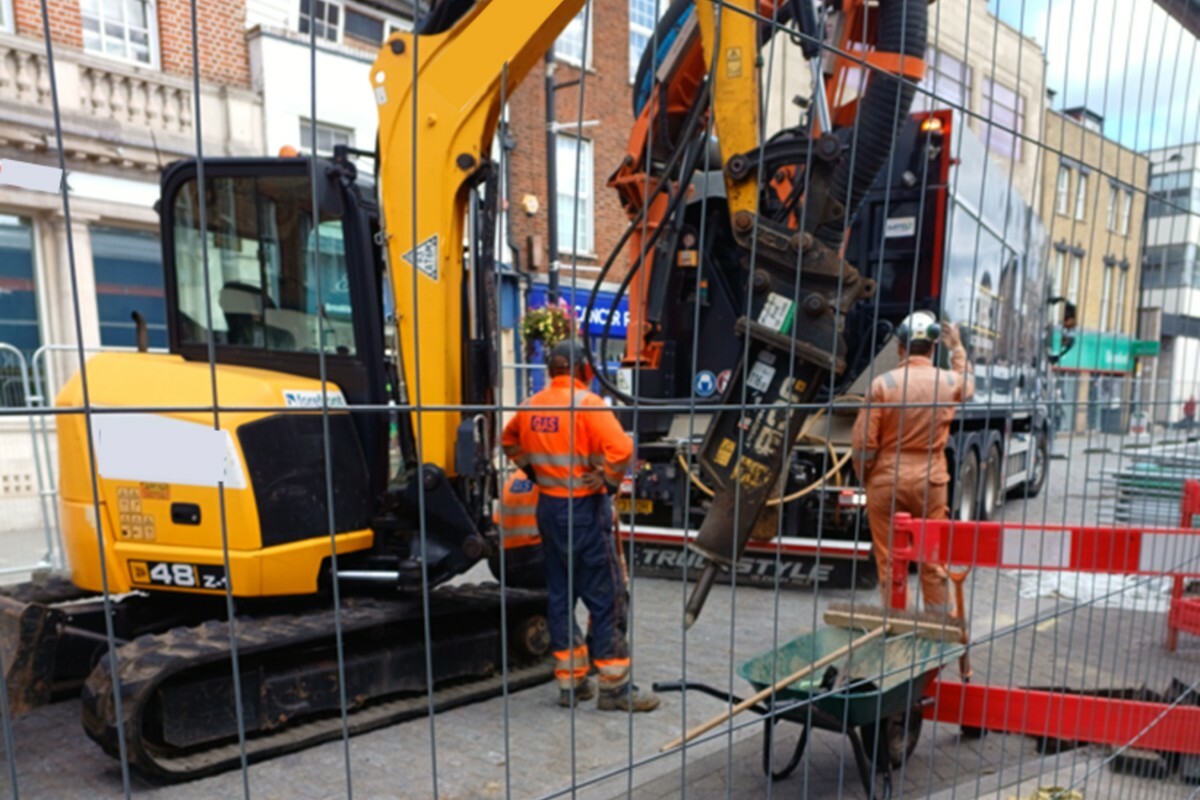
To ensure the results calculated by Impact360 truly reflect what happens in the real world, researchers Lewis Makana and Kelwalee Jutipanya from the University of Birmingham are taking to the streets to study live works in action. They’re measuring the real effects of road closures, traffic diversions and machinery use — collecting detailed data on equipment, fuels, materials and site operational practices.
“Case studies turn ‘street works and road works as usual’ into measurable evidence. Beyond plant and materials, we quantify traffic delay, local noise context and reinstatement choices so the tool can recommend lower-carbon, lower-disruption options — not just lower line-item cost,” explains Lewis Makana.
“The case studies bring the research to life. They let us test the tool in real-world conditions and capture how street and road works actually affect people, traffic, and the environment — bridging the gap between academic modelling and what really happens on the ground,” adds Kelwalee Jutipanya.
Gathering evidence before, during and after works
Before each trial, researchers gather as much data as possible about what’s planned on site, the type of works (trenching, trenchless, utility replacement, road repair, etc.), what equipment will be used and when and how traffic will be managed or diverted.
Once on site, they test how closely the plan matches reality. Did everything happen as expected? How feasible is it to use the tool in real time? Who enters the data, where does it fit within the site’s workflow, what’s routinely missing and how much time does it take?
“Standing in the works canyon and tracing the chain from permit to pit and talking to works teams about what really happens between drawings and reality, is exactly what we need to encode in the tool,” says Makana.
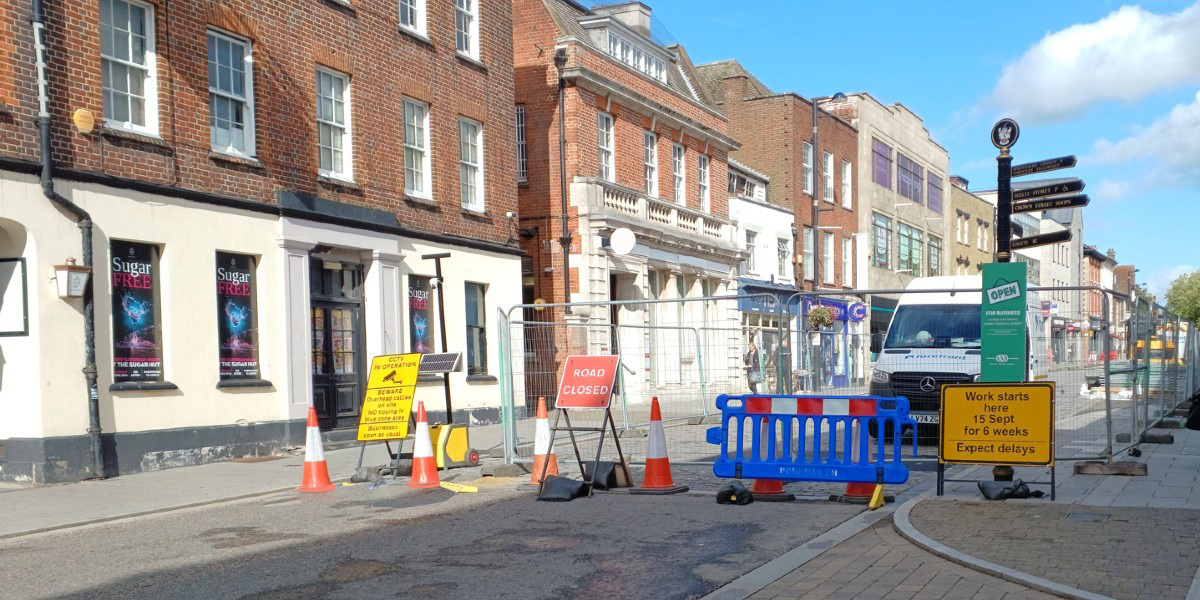
Sensors and surveys capture traffic counts, flow and noise levels. Observations record how local life is affected. For example, one high street closure meant deliveries had to be carried by hand to shops with only a front entrance.
After the works, the team continues to collect traffic data to understand any long-term changes: do drivers who discovered a shortcut during the works keep using it afterwards?
Lessons from the field
Working on live sites brings challenges and surprises.
“The biggest challenge is data collection. Every site is dynamic, with noise, traffic and weather constantly changing and information often spread across different parties. But it’s also what makes the work exciting. Each visit gives us new insights into how to improve data accuracy and build a clearer picture of real construction activity for future assessments,” says Jutipanya.
“Business-as-usual data rarely exists at the granularity we need. Every missing field widens the gap between ‘cost-only’ delivery and the ‘full-impact’ decisions Impact360 is evaluating,” adds Makana.
The fieldwork is also revealing how design choices affect the real impact of works. Makana was surprised at how little excavation is needed when trenchless methods are used and how much impact happens away from the trench itself.
“I was struck by how far the impacts of construction actually reach — noise, fumes and diversions extend much further than expected. The design of works and the quality of traffic management are crucial in shortening durations, minimising disruption and keeping communities moving,” notes Jutipanya.
Testing and improving Impact360
Back in the office, the researchers input their findings into Impact360, checking whether its analysis aligns with what they observed on site. They also test the tool’s optioneering feature, exploring how the impacts would change if the works had been done differently.
That includes comparing alternative techniques (open cut, minimum dig, trenchless works, automated condition assessment and maintenance), different materials and fuel types (electric, petrol, diesel) and the timing of works across the day or week.
“Each case study tells its own story. Together, they help us understand the wider social and environmental impacts of street and road works, shaping tools and decisions that make our streets safer, fairer, and more sustainable,” says Jutipanya.
From fieldwork to full-impact decision-making
The insights gathered from these trials are already being used to refine Impact360 — ensuring that when it launches for sector-wide use it’s grounded in reality and ready to deliver value.
“Full-impact measurement is the missing layer between HAUC compliance and PAS 2080. If we log the right things once, planners can see the true trade-offs between trenching, minimal-dig, trenchless and robotic options, not just programme and cost,” says Makana.
Supported by HAUC(UK) as part of the Road to Net Zero project, this work is a major step towards an evidence-led, data-driven approach to achieving sustainable, low-carbon street and road works across the UK.
Learn more
- To find out more about Impact360 and the Carbon Emissions Evaluator, click here: Impact 360 and CEE
- To find out more about the Road to Net Zero project, click here: visit Road to Net Zero | Home.


